menu
© Fukuoka Prefecture Tourism Association

1)Opening, Special Talk and Keynote

APMC 2026 Opening, Special Talk and Keynote

Opening Session

Room
Main Hall
Date and Time
November 9 (Mon) 9:00-9:30

Abstract

The opening session starts with a welcome address and a brief introduction of the event by the APMC 2026 Steering Committee Chair, followed by congratulatory addresses from invited representatives. After the opening ceremony, the APMC 2026 opening session goes on to two Keynote Addresses.

The Evolution of Terahertz Technologies: New Roles for Communication in the 2030s

Speaker
Prof. Tadao Nagatsuma (The University of Tokyo)
Room
Main Hall
Date and Time
November 9 (Mon) 9:30-10:15

Abstract

Terahertz (THz) technologies have progressed rapidly over the past decade, driven by expectations for ultrahigh-capacity wireless links in beyond-5G and 6G systems. Early demonstrations in the 300 GHz band achieved data rates exceeding 100 Gb/s, supported by wide contiguous bandwidth and advances in photonics-assisted and electronic THz devices. These achievements fueled strong anticipation that THz would become a key enabler of future mobile communication.

As 6G standardization advances, however, it has become clear that THz frequencies will play a more limited role in wide-area wireless systems due to challenges in propagation, device maturity, and deployment. Yet this does not diminish the importance of THz technologies. Instead, THz is evolving toward new roles that integrate communication, sensing, and photonics. Short-range ultrahigh-capacity links, joint communication and sensing, high-resolution imaging, and advanced material evaluation are emerging as practical and impactful application domains.

At the same time, photonics-electronics fusion is opening new paths for THz-band communication through fiber-based architectures, including THz-over-fiber and photonic interconnects aligned with the evolution of co-packaged optics (CPO). By reframing THz not only as a wireless frontier but as a versatile technology bridging fiber, free space, and sensing, new opportunities arise for communication infrastructures in the 2030s. This talk will discuss how THz technologies may contribute to future networks and intelligent sensing environments, and how their evolution can continue to inspire the next generation of research.

Biography

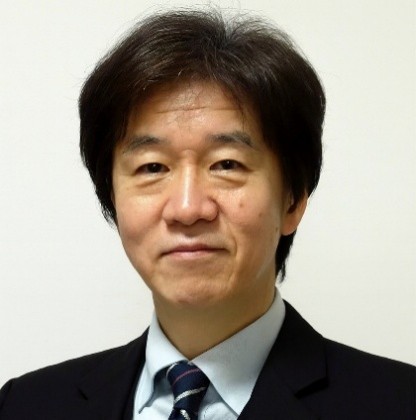
Tadao Nagatsuma

Tadao Nagatsuma received Ph.D. degree in electronic engineering from Kyushu University, Fukuoka, Japan, in 1986. From 1986 to 2007, he was with Nippon Telegraph and Telephone Corporation, NTT, Kanagawa, Japan. From 2007 to 2024, he was a Professor of the Graduate School of Engineering Science, and The Institute of Scientific and Industrial Research at The University of Osaka. He is a Professor Emeritus of The University of Osaka, and is now with The Institute for Photon Science and Technology of the Graduate School of Science at The University of Tokyo. His research interests include millimeter-wave and terahertz photonics and their applications to wireless communications, sensing, and measurement. He is a Life Fellow of the IEEE, and a Fellow, Honorary Member of the Institute of Electronics, Information and Communication Engineers, IEICE, Japan. He serves as a President of the Terahertz Systems Consortium, Japan, and Past-Vice President of the IEICE.

InP HBTs and their heterogeneous integration with BiCMOS: Opportunities and Results

Speaker
Prof. Wolfgang Heinrich (Ferdinand-Braun-Institut (FBH), Berlin, Germany)
Room
Main Hall
Date and Time
November 9 (Mon) 10:15-11:00

Abstract

With the emergence of 6D and other applications in D-band and beyond, InP is receiving renewed interest as a semiconductor material system providing ultra-fast devices with best-in-class power capabilities. Broadband D-band point-to-point links and high data-rate mixed-signal ICs for electro-optical transceivers in data centers are applications where InP HBTs can provide a boost in performance compared to their Si-based counterparts. In order to address these market opportunities, however, integration with CMOS and BiCMOS is a prerequisite. With this background, the talk reviews the perspectives for InP and presents a heterogeneous integration approach combining bipolar InP chiplets with BiCMOS chips through a micro-pillar flip-chip scheme. The interconnects offer 300 GHz bandwidth, the InP process allows to realize MMICs with a transistor fmax of more than 500 GHz. This qualifies the approach for both D-band transceivers as well as for high-data-rate drivers and transimpedance amplifiers. The platform is being developed in the framework of the APECS pilot line funded by the European Union and the German government.

Biography

Wolfgang Heinrich

Wolfgang Heinrich received the PhD and Habilitation degrees in 1987 and 1992, respectively, both from the Technical University of Darmstadt, Darmstadt, Germany.

Since 1993, he has been with the Ferdinand-Braun-Institut (FBH) at Berlin, Germany, where he was the Head of the Microwave Department and the Deputy Scientific Director of the institute until his retirement in 2026. Since 2008, he has been also Professor with the Technical University of Berlin.

Dr. Heinrich has authored or coauthored more than 450 peer-reviewed publications and conference contributions. His main expertise is in III-V MMIC design and fabrication, with an emphasis on GaN and InP power amplifiers, as well as mm-wave and sub-mm-wave integrated circuits and packaging.

He has been serving the microwave community in various functions. From 2010 through 2018, he was the President of the European Microwave Association (EuMA). Also, he has held significant roles with the IEEE MTT society, including Distinguished Microwave Lecturer and Associate Editor of the IEEE Transactions on MTT. He is the recipient of the 2019 EuMA Distinguished Service Award and the 2020 IEEE MTT Distinguished Service Award.